
Hot vinyasa vs Bikram comes down to structure. Hot vinyasa is a flowing, music-led class in a warm room that changes every time. Bikram, now taught as Original Hot 26&2 Yoga, is a fixed 90-minute sequence of 26 postures and 2 breathing exercises at 40°C and 40% humidity. Choose flow for variety, or the 26&2 for measurable progress.

That short answer hides a lot of detail, so this hot vinyasa vs Bikram guide breaks it down. You'll see how hot vinyasa, hot power and hot yoga sculpt differ from the 26&2, what the research actually measured, and which format suits your goal. It's written from a 26&2 teacher's standpoint, but we'll be fair to the flow side too.
Hot Vinyasa vs Bikram: The Short Verdict
Most people asking the hot vinyasa vs Bikram question want to know one thing: which class will they actually keep doing? So here is the plain verdict first, then the reasons.
- Pick hot vinyasa if you get bored easily, love music, and want upper-body work from repeated push-up style transitions.
- Pick the 26&2 if you want the same class every time, so you can track your progress posture by posture.
- Pick the 26&2 if you want the style with the larger body of published research behind it.
- Do both if you want variety and a stable benchmark in the same week.
Neither style is "better" in every way. However, they train you in different ways, because one changes and the other doesn't. That difference shapes everything else in this comparison, from heat to teaching style to how you measure results.
Hot 26 vs Hot Flow vs Hot Power vs Sculpt: Side by Side
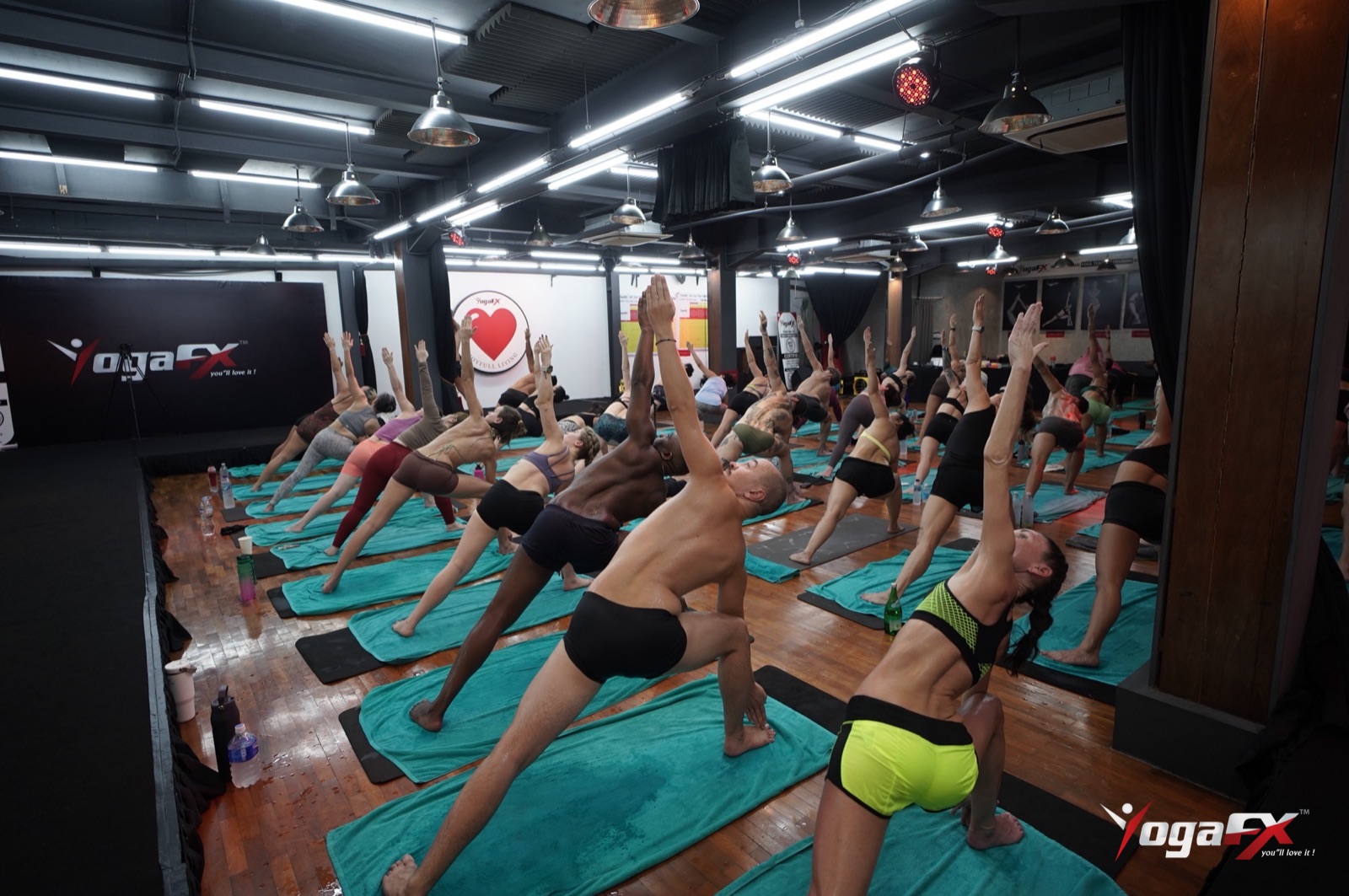
"Hot yoga" is now an umbrella term. Studios use it for at least four different formats, and they aren't interchangeable. This table shows the hot 26 vs hot flow split, plus the two flow offshoots you'll see on most timetables. It's the quickest way to see the hot vinyasa vs Bikram difference before the detail.
| Format | Typical room | Sequence | Class length | Main training effect |
|---|---|---|---|---|
| Original Hot 26&2 (Bikram) | 40°C, 40% humidity | Fixed: 26 postures, 2 breathing exercises | 90 minutes | Flexibility, balance, lower-body strength, focus |
| Hot vinyasa (hot flow) | Warm to hot; set by each studio | Changes every class; breath-linked flow | Often 60 minutes | Mobility, endurance, upper-body work |
| Hot power yoga | Warm to hot; set by each studio | Changes; faster, strength-led flow | Often 60 minutes | Muscular endurance, heart rate spikes |
| Hot yoga sculpt | Warm to hot; set by each studio | Flow plus light hand weights and cardio bursts | Often 60 minutes | Toning, conditioning, interval-style effort |
Notice the pattern. The three flow formats share one trait: the teacher builds a new class each time. The 26&2 is the only one where the sequence, order and timing stay fixed. Because of that, it's also the only one where research results from one room can be compared with another.
What Is Hot Vinyasa, and How Hot Is It?
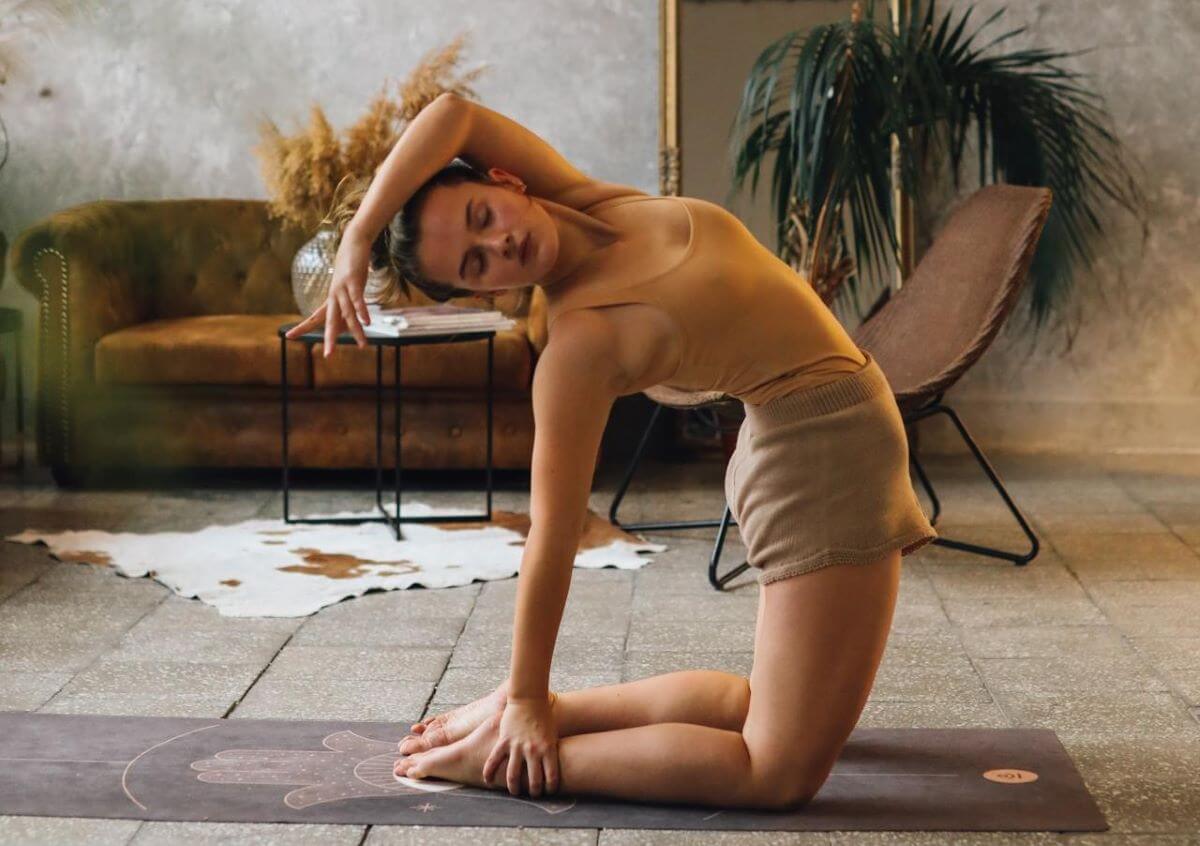
Hot vinyasa is vinyasa flow taught in a heated room. You move from pose to pose on the breath, usually linking sequences with a plank, a low push-up and an upward-facing stretch. Then the teacher strings those links into a new flow each day, often set to a playlist. In the hot vinyasa vs Bikram debate, that variety is flow's main selling point.
How hot is hot vinyasa? There's no single standard. Each studio picks its own setting, so one class may feel warm while another feels close to a 26&2 room. For example, in a study commissioned by the American Council on Exercise, researchers at the University of Wisconsin-La Crosse tested a heated class that averaged about 92°F (around 33°C).
That was roughly 22 degrees warmer than the same class in a normal room.
The finding surprised people. Heart rates in the hot class averaged 57% of maximum, against 56% in the normal room. Both landed in the "light" intensity range. Yet participants rated the hot class as harder. In other words, heat made the class feel tougher than it measured.
Who hot vinyasa suits best
- People who need music and variety to stay motivated.
- Students who already know basic yoga shapes and can follow a fast, changing flow.
- Anyone wanting more upper-body loading from repeated plank and low push-up transitions.
Hot Yoga vs Hot Power Yoga and Hot Yoga Sculpt
When people compare hot yoga vs hot power yoga, they usually mean a fixed 26&2 class against a faster, strength-led flow. Hot power yoga takes the vinyasa idea and turns up the pace. Expect more chair holds, more lunges, more planks and less time resting between them.
So, is hot power yoga a good workout? For muscular endurance and a raised heart rate, it can be a solid one. But it's still a flow class, so the workload changes with the teacher. That makes it harder to know whether you improved or simply had an easier class this week.
Hot yoga sculpt goes one step further. It adds light hand weights and short cardio bursts to a heated flow. Think of it as a hybrid between a yoga class and a circuit session. It's popular with gym-goers, although it moves furthest from traditional yoga.
If power-style training is what you're really weighing up, our full guide to Bikram yoga vs power yoga covers that pairing in more depth.
What Makes the Original Hot 26&2 Different
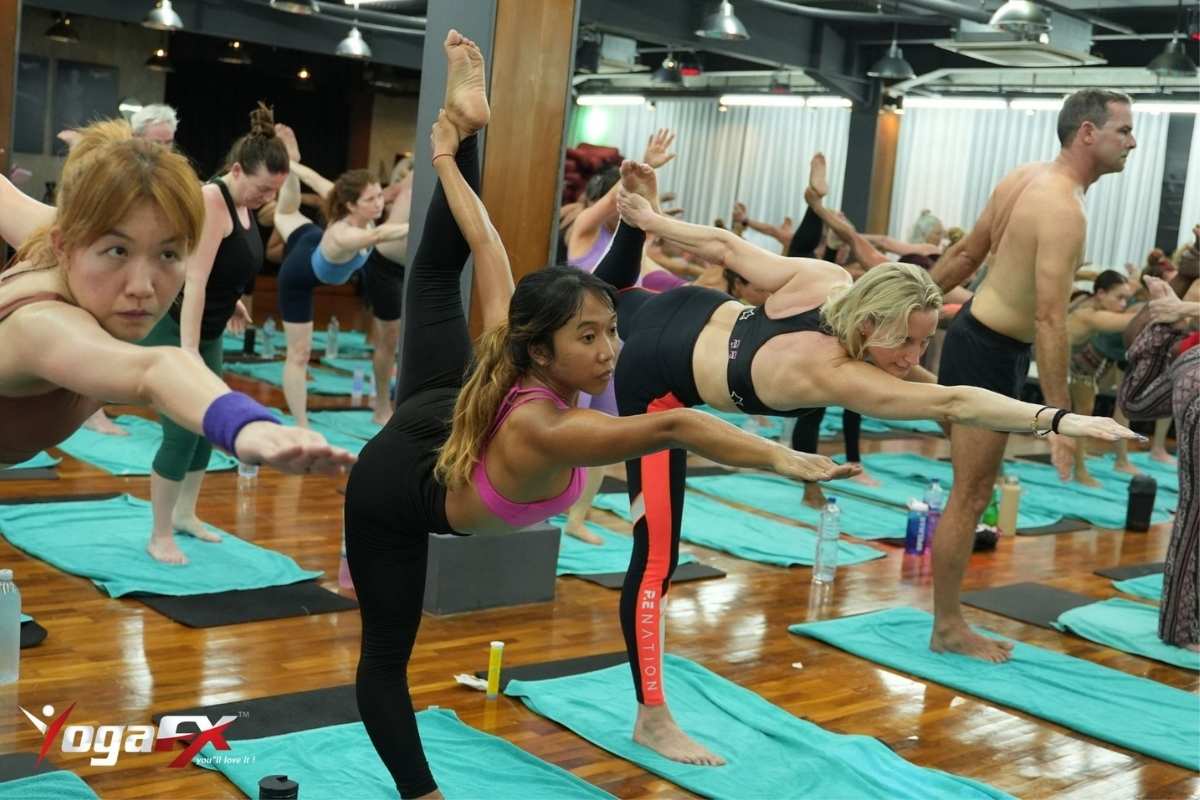
The 26&2 works the other way round. Every class runs the same 26 postures and 2 breathing exercises, in the same order, for 90 minutes. The room sits at 40°C with 40% humidity. There's no music and no demonstration. Instead, the teacher guides you with a scripted dialogue.
That sounds rigid, and it is. But rigidity is the point. Because nothing changes, you can compare this week's Standing Bow Pulling with last month's. You can see your hamstrings open in Paschimottanasana over a season. That kind of feedback is hard to get when the class changes every day. So in the hot vinyasa vs Bikram choice, repeatability is the 26&2's biggest advantage.
The heat is also set on purpose, not by mood. For the full reasoning behind 40 degrees and 40% humidity, see our guide to Bikram yoga temperature and why the numbers matter.
Who the 26&2 suits best
- Beginners who want clear spoken instructions instead of following a fast demo.
- Runners, cyclists and desk workers who want a reliable flexibility and balance routine.
- Practitioners who like to measure progress against the same benchmark each week.
Hot Vinyasa vs Bikram in Numbers
40°C / 40%
26&2 room standard
Heat and humidity stay the same in every Original Hot 26&2 class.
90 min
26&2 class length
26 postures and 2 breathing exercises, in a fixed order.
~33°C
Heated class tested by ACE
Average room in the 2013 University of Wisconsin-La Crosse comparison.
330 / 460 kcal
One 90-minute 26&2 class
Average burn for women and men, Colorado State University, 2014.
76.7% vs 2.3%
Share of hot yoga studies
Bikram-style classes vs vinyasa among 43 studies (Willmott et al., 2025).
Those five numbers explain a lot. The 26&2 is longer and more tightly controlled, while heated flow classes vary. And when scientists study hot yoga, they mostly study the fixed sequence, because it's the easiest format to repeat in a lab.
What the Research Says About Hot Vinyasa and Bikram
Here's the honest picture. The research base for heated yoga is still small, and it leans heavily one way. In a systematic review of 43 hot yoga studies published in 2025, Willmott and colleagues found that 76.7% of the studies used Bikram-style classes. Only 2.3% looked at vinyasa. On the evidence, then, the hot vinyasa vs Bikram comparison is lopsided.
That review also reported benefits across the studies: better flexibility, balance, body composition and strength in many groups. However, the authors added an important warning. They found no proof yet that hot yoga beats other yoga styles. In their words, claims of greater benefit are "at present, unsubstantiated." We think that's the right way to read it.
Hot vinyasa vs Bikram: calories and heart rate
A Colorado State University study led by Brian Tracy measured a single 90-minute 26&2 class. Average heart rate was about 160 beats per minute. Average burn was about 460 calories for men and 330 for women, close to a 90-minute brisk walk. That's useful, but it's lower than the 1,000-calorie claims you sometimes hear.
No study we could verify has measured a hot vinyasa class in the same way. So any calorie figure for hot flow is an estimate. For a deeper breakdown by body weight, read our guide on how many calories hot yoga burns.
Flexibility and strength
Earlier work from the same Colorado State lab (Tracy and Hart, 2013) followed beginners through an eight-week 26&2 programme. The group gained flexibility in the spine, hamstrings and shoulders, plus whole-body strength. Aerobic fitness, however, barely changed. So the 26&2 may be best seen as a mobility and strength practice, not a cardio replacement.
Mood and mental health
At Massachusetts General Hospital, a team led by Maren Nyer tested heated hatha yoga, the 26&2 style, in adults with depression. After eight weeks, 59% of the yoga group had their symptoms fall by half or more, against 6.3% of the comparison group.
Harvard's Science in the News summary notes the room was held at 105°F. Research suggests this is promising, though early. Yoga can support care, but it isn't a substitute for treatment, so please consult a healthcare professional before using it for any health condition.
Safety matters in any heated room. The ACE study found no dangerous rise in core temperature in its 33°C class, but a 40°C room asks more of you. Hydrate well, rest when you need to, and speak to your doctor first if you're pregnant or have a heart condition.
Teaching Hot Flow vs Teaching the 26&2
If you're thinking about teaching, the hot vinyasa vs Bikram gap gets even wider. A flow teacher designs a new sequence for every class. That's creative, but it takes time to do well, and safe sequencing in the heat is a skill in itself.
A 26&2 teacher learns one dialogue and delivers it precisely. So new teachers can lead a complete, safe class sooner, because the structure is already built. The challenge moves from "what do I teach?" to "how well do I deliver it?"
- Flow teaching rewards creativity, music choice and on-the-spot sequencing.
- 26&2 teaching rewards memory, voice, timing and reading the room.
- Both need solid heat-safety training, since a heated room raises the stakes.
What 26&2 Students Say After Trying Other Hot Styles
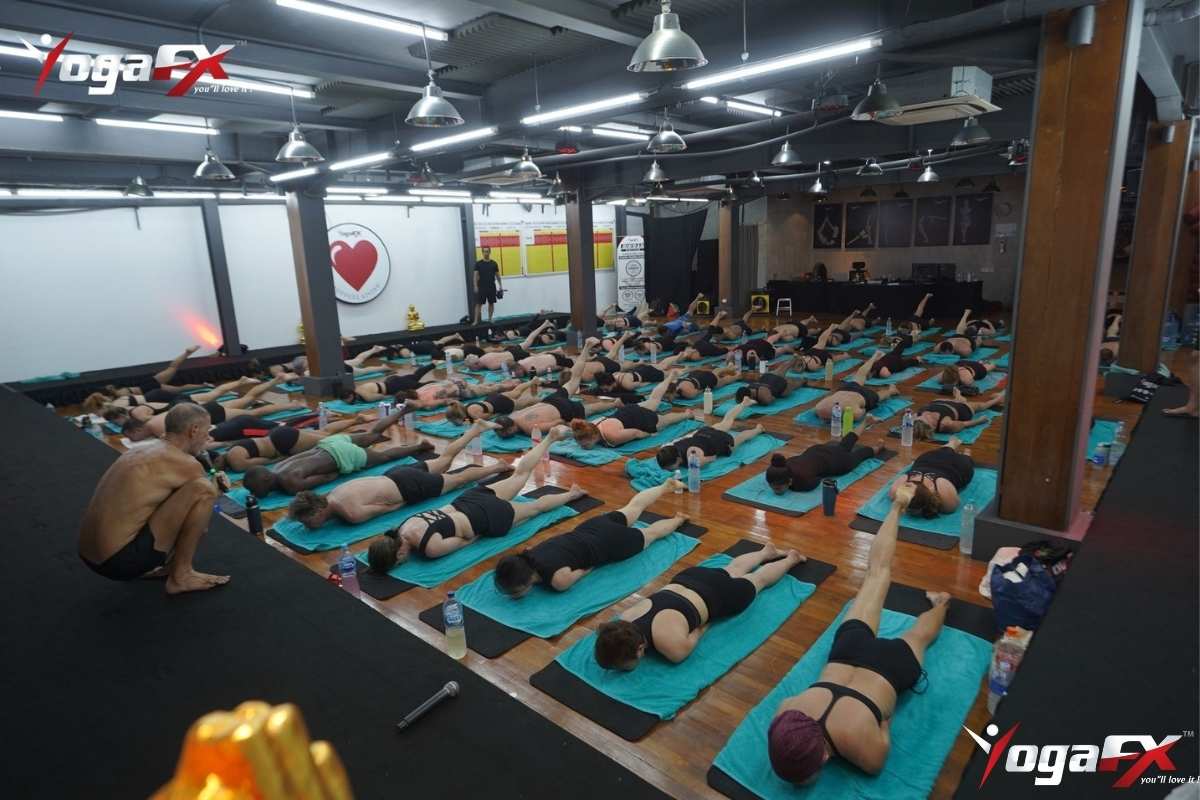
Plenty of people reach the 26&2 after years of other classes. Here's what three YogaFX students wrote in their Google reviews. We've kept their words as written, and marked the one paraphrase.
"As a proud Bikram Yoga addict who has attended classes all over the world, I highly recommend YogaFX."
Jade, Google review, 2021
"Before this journey, I had never truly known what Hot Yoga -Bikram Yoga- meant." The same review adds that this was more than practice: "I understood it, felt it, and lived it."
Mehtap, Google review, 2026
This reviewer described the practice as one for anyone pursuing a healthy, strong body and mind, "not just being flexible" (close paraphrase).
Mchris, Google review, 2022
Notice the common thread. None of them talk about novelty. Instead, they talk about depth, discipline and understanding the practice, which is exactly what a fixed sequence is built to give you.
Bikram vs Vinyasa: Which Should You Choose?
Still torn on Bikram vs vinyasa? The hot vinyasa vs Bikram answer depends on your main goal. This quick guide uses the evidence above, not studio marketing.
| Your main goal | Best fit | Why |
|---|---|---|
| Track progress over months | Original Hot 26&2 | Same postures, same order, same room every time |
| Variety and music | Hot vinyasa | A new flow each class, usually with a playlist |
| Upper-body strength | Hot power or hot vinyasa | Repeated plank and low push-up transitions |
| Flexibility and balance | Original Hot 26&2 | Measured gains in spine, hamstring and shoulder flexibility |
| Gym-style toning | Hot yoga sculpt | Light weights and cardio bursts added to flow |
| Teaching career, fast start | Original Hot 26&2 | One scripted dialogue to master |
A practical option is to combine them. For example, you could practise the 26&2 three times a week as your benchmark, then add one flow or power class for variety. That mix covers mobility, balance and upper-body work without losing a stable way to measure progress.
Want to see how the 26&2 stacks up against Ashtanga, Yin and Hatha as well? Our comparison of Bikram yoga against every major style covers them all.
Learn the Original Hot 26&2 With YogaFX in Bali
YogaFX teaches the Original Hot 26&2 Yoga format in natural tropical heat in Seminyak and Canggu, Bali, not with electric heaters. Our teacher training is led by Mr. Ian Terry, E-RYT 500, who has over 12,000 teaching hours and trained for five years, from 2014 to 2019, with the founder of the method. He's also a Master Trainer of the Republic of Indonesia Yogasana Sports Federation.
For trainees who arrive from hot vinyasa or power classes, the scripted dialogue is usually the biggest adjustment, and it sits at the centre of Mr. Ian's teaching. Since 2017, more than 1,500 graduates from over 80 countries have trained with YogaFX.
The MasterClass is a 6-day hybrid programme: an online pre-course, then an intensive in Bali. Graduates earn Yoga Alliance RYT 200 plus Bikram Hot 26&2 200-Hour certification. The next batch runs from 24 to 29 January 2027 at Soham Wellness Center in Seminyak, with the current Early Bird price at US$1,899. See the full format on our Bikram yoga teacher training guide.
FAQ
What is hot vinyasa yoga vs Bikram?
Hot vinyasa is a flowing class in a heated room, built fresh by the teacher each time and usually set to music. Bikram, now taught as Original Hot 26&2 Yoga, is a fixed 90-minute sequence of 26 postures and 2 breathing exercises at 40°C and 40% humidity, guided by a scripted dialogue.
Is hot vinyasa yoga for beginners?
It can be, if the class is labelled beginner-friendly. However, fast transitions and changing sequences are harder to follow when you're new. Many beginners find the 26&2 easier to start, because the teacher talks you through every posture and the order never changes. Either way, hydrate well and rest when needed.
Is hot power yoga a good workout?
Yes, for muscular endurance and short heart rate peaks. Hot power yoga uses more lunges, planks and chair holds than a standard flow. Because each class changes, though, it's harder to track progress. Pairing it with a fixed 26&2 class gives you both intensity and a reliable weekly benchmark.
Does hot yoga sculpt build muscle?
Hot yoga sculpt adds light hand weights and cardio bursts to a heated flow, so it can improve muscular endurance and tone. It's unlikely to build much size, because the weights are light. For lasting strength and flexibility together, a practical approach is to combine sculpt with a fixed-sequence 26&2 practice.
Which burns more calories, hot vinyasa or Bikram?
A Colorado State University study measured about 460 calories for men and 330 for women in a 90-minute 26&2 class. We found no comparable measurement for hot vinyasa, so flow figures are estimates. In practice, the class you'll repeat consistently matters more than a small calorie difference per session.
Still have questions about hot vinyasa vs Bikram? Message Mr. Ian and the YogaFX team on WhatsApp and we'll answer them personally.